Peter and Judas Iscariot

Type
Peter
The Loyalist · 6w7
Judas Iscariot
Not typed
Strengths
Peter
Courage, honesty, wholehearted loyalty, quick to act
Judas Iscariot
He was entrusted with responsibility. The group gave him charge of the moneybag ().
Struggles
Peter
Overpromises, reacts under pressure, cares what the room thinks
Judas Iscariot
Love of money. He objected to Mary's costly gift, not out of care for the poor, but because he was stealing from the common fund ().
Wanted most
Peter
To be fully devoted to Jesus
Judas Iscariot
Scripture does not say directly. It points to money (, ).
Feared most
Peter
Being exposed, abandoned, or on the wrong side
Judas Iscariot
Not recorded.
Key failure, and what came next
Peter
The denial. Three times by a fire he says he does not know Jesus. The rooster crows. He goes out and weeps bitterly. ()
ThenThe restoration. Three times Jesus asks, “Do you love me?” Three times he gives Peter work to do: “Feed my sheep.” ()
ThenThe restoration. Three times Jesus asks, “Do you love me?” Three times he gives Peter work to do: “Feed my sheep.” ()
Judas Iscariot
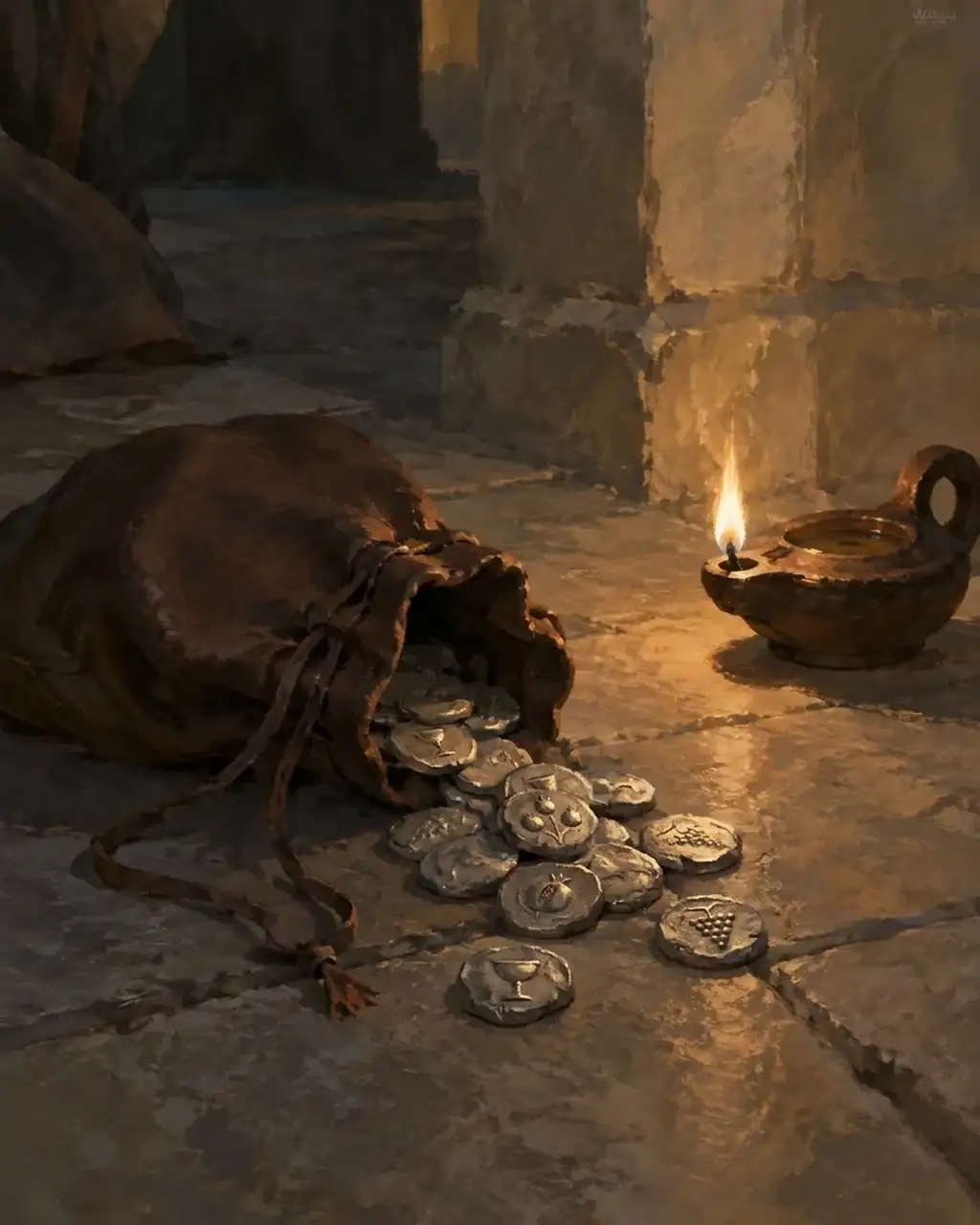
Remorse without return. When Jesus was condemned, Judas brought the silver back and confessed to the priests. They turned him away, and he went and hanged himself. ()
The story ends here.
The story ends here.
How they point to Christ
Peter
Peter's story is not about trying harder. It's about a Savior who restores failures. Jesus prays for him before he falls (), then restores him three times over a charcoal fire, like the fire of the denial. Peter later calls Jesus the true cornerstone (). He is a rock only because he is built on the Rock.
Judas Iscariot
Jesus kept faith with the one who broke faith with him. Jesus knew from the start and still chose Judas (). He shared bread with him and called him “Friend” in the garden (), and he said the betrayal was grave (). Peter also failed that night, yet he wept and came back to Jesus, while Judas took his remorse to the priests and not to Christ. “For godly grief produces a repentance that leads to salvation without regret, whereas worldly grief produces death” ().