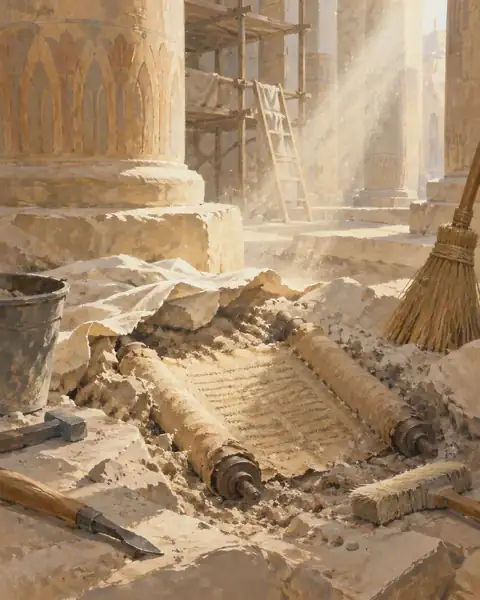
Hezekiah became king of Judah at twenty-five, after a father who had shut the temple and worshiped other gods. He reopened the doors in his first month. He tore down idols, broke the bronze serpent people had begun to worship, and called the nation back to Passover.
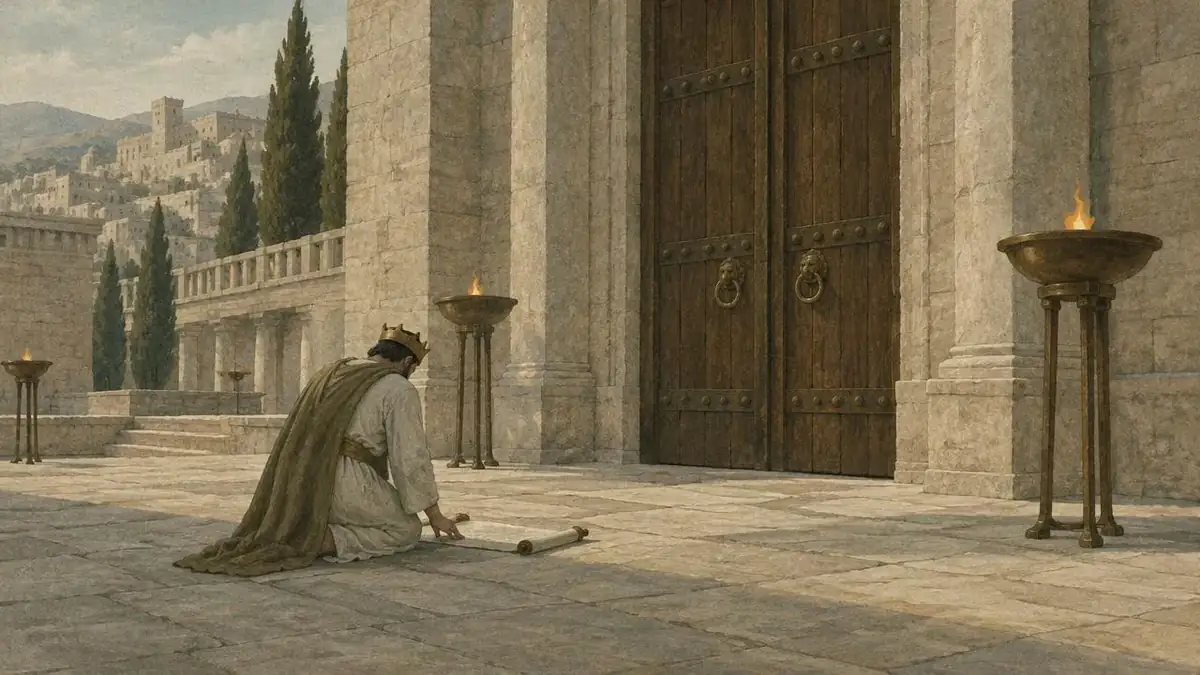
Then Assyria came. The greatest army in the world surrounded Jerusalem, and its commander mocked Judah's God. Hezekiah took the letter of threats into the temple and spread it out before the LORD. That night the city was saved. Later, after being healed, he showed off his treasures, and Isaiah told him it would all be carried away.
“
He trusted in the LORD, the God of Israel
Name means
“The LORD strengthens”
Home
Jerusalem
Role
Thirteenth king of Judah, reformer
Read in
; ;
Hezekiah's story
The letter before the LORD
Beginning
Opening the doors
In his first month he reopens the temple and tells the priests to consecrate themselves.
High point
Breaking the serpent
He removes idols and breaks the old bronze serpent of Moses, which people had made into an idol.
Low point
Surrounded
Assyria takes Judah's cities and surrounds Jerusalem. Its commander mocks Judah's trust in God.
High point
The letter before the LORD
He spreads the threatening letter before the LORD and prays. That night the Assyrian camp is struck.
Turning point
Fifteen more years
Sick to the point of death, he prays and weeps. God adds fifteen years to his life.
Ending
Showing the treasures
He proudly shows envoys from Babylon all his storehouses. Isaiah says it will all be carried to Babylon.
Starts as a young reformer after a faithless father. Ends as a king who trusted God and then rested on his own peace.
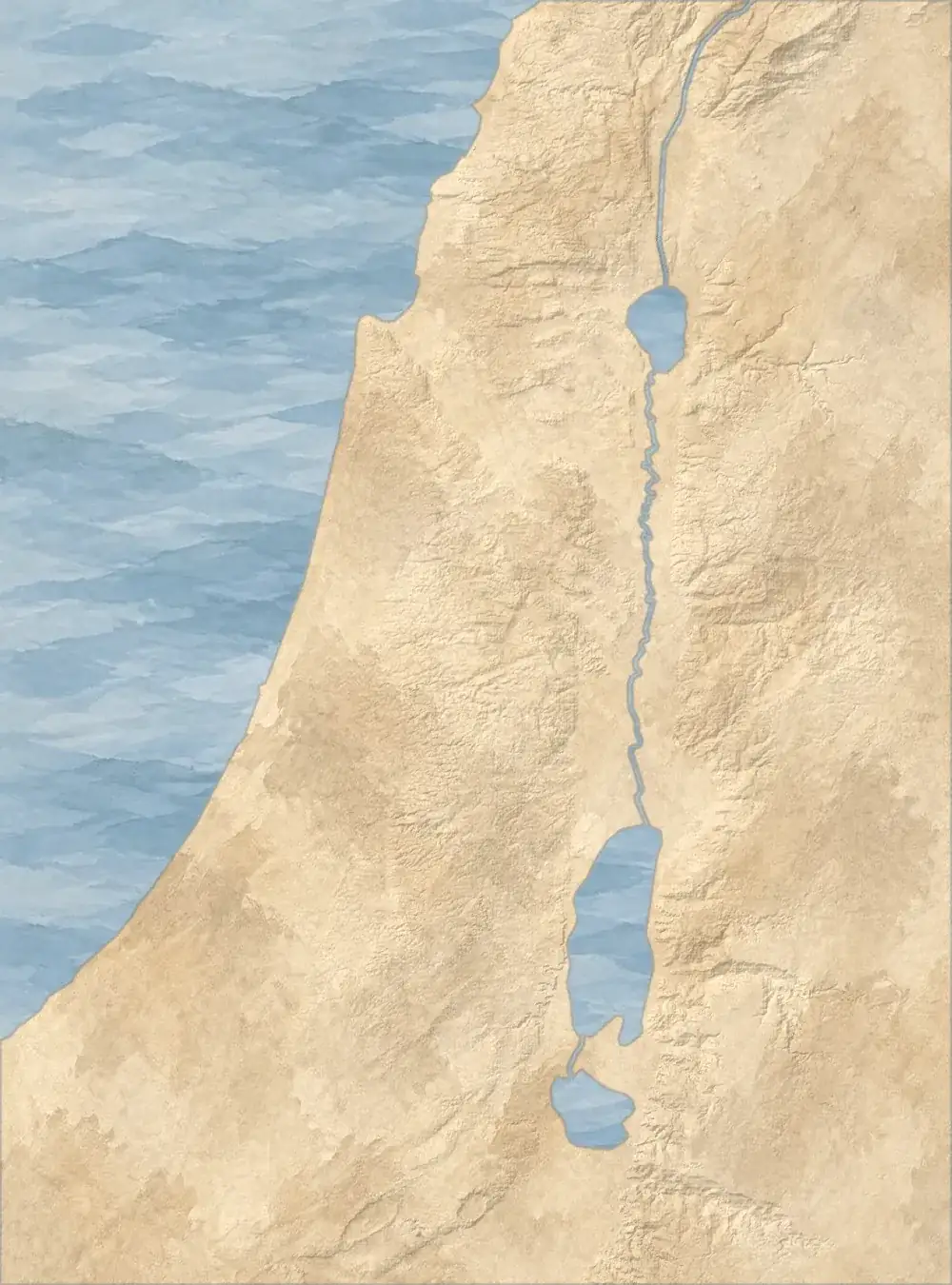
Where Hezekiah lived and went
Only places Scripture records. Softer, dotted pins are traditional or uncertain sites. Tap a pin for the passage.
HomeMinistryKey momentTraditional or uncertainPinch or use + to zoom. Tap a cluster to spread it out.
Hezekiah's story stays in Jerusalem.
How Hezekiah is wired
The Peacemaker
Enneagram 9, Reformer wing
He wants peace and security, and he brings his crises to God rather than fight alone.
Scripture doesn't give us much here, so treat this as a best guess.
At their best, toward 3 Under stress, toward 6
Why we think so
1
He takes threats to God. He spreads the letter before the LORD instead of answering the commander. ()
2
He pays to avoid war. He strips the temple doors to pay Assyria's demand. ()
3
He settles for peace. Told of coming disaster, he is content that there will be peace in his own days. ()
The 1 wing shows in his reforms. He removes the high places and breaks the bronze serpent. ()
The Achiever. At his best he acts with energy: cleansing the temple, restoring worship, and cutting a tunnel for the city's water. ()
The Loyalist. Under threat he turns anxious, calling it a day of distress and asking Isaiah to pray. ()
The case for 6
His anxious seeking of help from Isaiah and God fits a Loyalist. But his settling for peace in his own day points to a 9.
Other lenses
Big Five. Read from what is recorded in Kings and Chronicles.
ReservedOutgoing
SteadyReactive
ChallengingAccommodating
SpontaneousDisciplined
TraditionalCurious
DISC style: Faithful, prayerful, wanting calm.
Strengths & struggles
What's good in Hezekiah
Bold reform (). Prayer under pressure (). Humble before God's word ().
Where Hezekiah struggles
Pride after his healing (). Showing Babylon his treasures (). Content that disaster would come after his days ().
What Hezekiah wanted most
Peace and security for Judah, and more years of life ().
Hezekiah could pray for his city, but he could not keep it safe forever. Jesus keeps his people for good.
Hezekiah's prayer saved Jerusalem for a time, and his own heart grew proud. Jesus prayed for his people without any pride, and his intercession never stops (). Every enemy that surrounds us will fall before him ().
Questions to sit with
1
What threatening letter in your life could you spread out before God today?
2
Hezekiah was content that trouble would come after his time. Whose future are you thinking about beyond your own?
Study Hezekiah with your group
Ready-to-lead group studies with discussion questions and a leader's note are on the way.